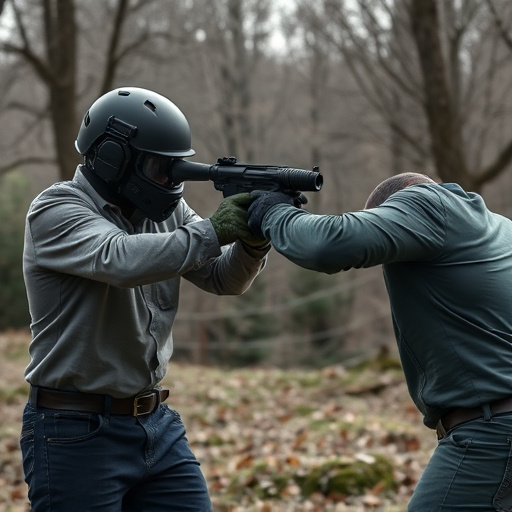
Heavy-duty stun batons for security leverage optimized electrode placement to deliver powerful shocks with precise current distribution, enhancing effectiveness in self-defense and crowd control while minimizing risks. Real-world testing ensures reliability and user safety through durability, power output, and endurance assessments.
In the realm of personal safety and law enforcement equipment, heavy-duty stun batons are emerging as a game-changer in securing public spaces. This comprehensive guide delves into the critical aspect of stun gun electrode spacing and its profound impact on effectiveness. From understanding the fundamentals to real-world testing, we explore how optimal electrode placement enhances shock power while considering essential safety measures. Discover why heavy-duty stun batons are becoming indispensable tools for security professionals.
- Understanding Stun Gun Electrode Spacing
- Impact of Electrode Placement on Effectiveness
- Heavy-duty Stun Batons: A Security Game Changer
- Optimizing Electrodes for Maximum Shock Power
- Safety Considerations in Electrode Design
- Real-world Testing: Stun Baton Performance Evaluation
Understanding Stun Gun Electrode Spacing
The effectiveness of a stun gun largely depends on its electrode spacing, especially in heavy-duty stun batons designed for security purposes. Electrode placement and distance between them play a critical role in delivering an electric shock that immobilizes or disorientates the target. Properly spaced electrodes ensure uniform current distribution across the contact area, maximizing the impact of the stun while minimizing the risk of electrical arcs or misfires.
In heavy-duty stun batons, electrode spacing is optimized to balance power and control. Narrower spacing increases the intensity of the shock but may require more precise targeting. Wider spacing provides a safer margin for error but could reduce the overall impact. Understanding these dynamics helps users choose the right device for their security needs, whether it’s for personal protection or professional security applications.
Impact of Electrode Placement on Effectiveness

The placement of electrodes on a heavy-duty stun baton plays a significant role in its overall effectiveness as a security tool. The design and spacing of these electrodes are crucial, ensuring precise and powerful shock delivery when deployed against an assailant. Optimal electrode placement allows for maximum electrical current distribution across the target area, enhancing the stun device’s impact and safety.
When considering heavy-duty stun batons for security purposes, manufacturers typically position electrodes strategically to cover a substantial surface area of the body. This ensures that even if an attacker manages to block or shield part of the baton, the current can still flow through other areas, ensuring a more comprehensive stun effect.
Heavy-duty Stun Batons: A Security Game Changer
In the realm of personal security, heavy-duty stun batons are emerging as a game-changer. These powerful tools offer an increased level of protection compared to traditional stun devices. The key lies in their advanced electrode spacing—a strategic arrangement designed to maximize the impact of the electric shock. With wider electrodes, these stun batons deliver more current over a larger area, ensuring a swift and effective incapacitation.
This innovative feature makes heavy-duty stun batons an attractive option for security professionals and individuals seeking robust self-defense solutions. Their effectiveness is particularly notable in high-risk situations, where the ability to quickly subdue an assailant can be the difference between safety and harm. The strategic electrode spacing not only enhances the stun gun’s performance but also adds a new layer of confidence for those who rely on it as a last line of defense.
Optimizing Electrodes for Maximum Shock Power
Optimizing electrode spacing in heavy-duty stun batons is paramount for maximizing shock power and effectiveness during security operations. Electrodes that are too close together can lead to a concentrated but less powerful jolt, while electrodes spaced too far apart may result in reduced current flow and lower impact. The ideal arrangement strikes a balance between these factors, ensuring a strong electric discharge that temporarily disables targets.
Professionals in the field of security often turn to heavy-duty stun batons as a non-lethal solution for self-defense and crowd control. These batons are designed with robust construction and strategically placed electrodes to deliver a powerful shock. By understanding electrode spacing dynamics, officers and security personnel can leverage the full potential of these devices, ensuring maximum effectiveness in various situations that call for immediate restraint or deterrence.
Safety Considerations in Electrode Design

When designing electrodes for heavy-duty stun batons used in security applications, safety considerations are paramount. The spacing between electrodes plays a crucial role in ensuring both effectiveness and user protection. Proper electrode spacing guarantees that an electric current is efficiently transferred to the target, neutralizing threats swiftly. However, it also dictates the device’s overall safety profile by influencing the intensity and distribution of the shock.
Engineers must balance these factors to create stun batons capable of neutralizing potential dangers while minimizing risks to users. Inadequate spacing could lead to inconsistent or insufficient shocks, leaving officers vulnerable. Conversely, excessive electrode proximity might result in higher current density, potentially causing discomfort or adverse effects on individuals with medical conditions. Thus, meticulous design and adherence to safety standards are essential when crafting heavy-duty stun batons for security personnel.
Real-world Testing: Stun Baton Performance Evaluation
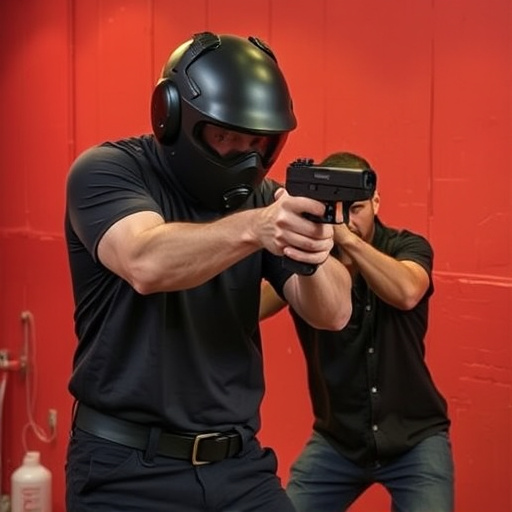
Real-world testing is an indispensable method to evaluate the effectiveness and performance of heavy-duty stun batons designed for security purposes. These tests go beyond lab settings, simulating real-life scenarios where such devices are employed. By subjecting stun batons to rigorous trials in various environments, researchers can assess their durability, power output, and overall reliability under stress.
Such evaluations often include drop tests to gauge the baton’s resilience, electrical performance checks to ensure consistent stun capabilities, and endurance tests to determine how well the device holds up over time. These real-world assessments are crucial in identifying potential weaknesses and validating the claims made by manufacturers. Ultimately, they help users make informed decisions when choosing heavy-duty stun batons for security applications.
In conclusion, understanding stun gun electrode spacing is paramount to ensuring optimal effectiveness. The strategic placement of electrodes significantly impacts shock power delivery, with heavy-duty stun batons emerging as a game-changer in security applications. By optimizing electrode design and considering safety measures, these devices offer maximum impact while adhering to critical safety protocols. Real-world testing further validates their performance, making heavy-duty stun batons a reliable choice for enhanced security measures.